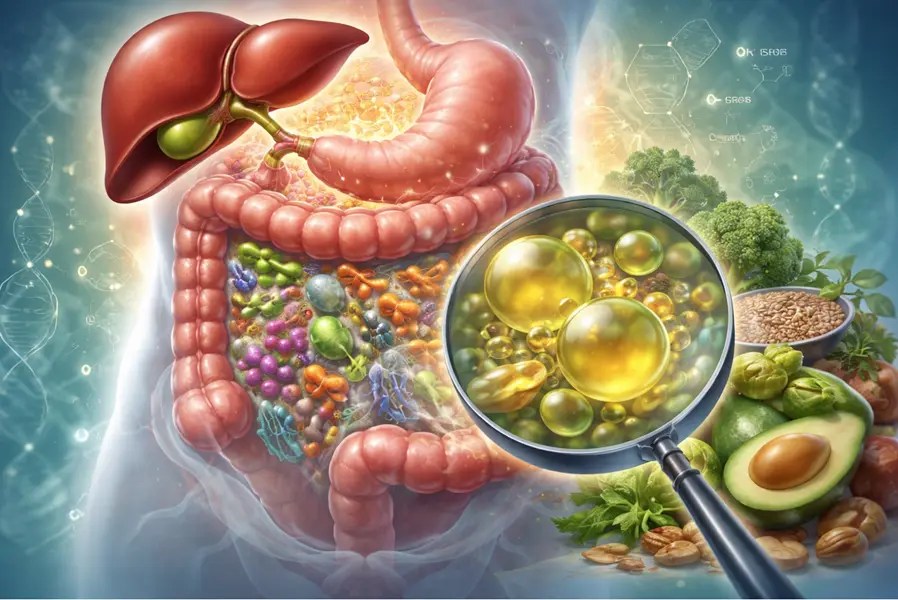
Athletes and couch-sitters share the same basic biology — but deep in their intestines, something looks quite different. Here’s what the science actually says.
Your gut is home to roughly 38 trillion microorganisms. Bacteria, archaea, fungi, viruses — a whole ecosystem packed into about 1.5 metres of large intestine. And for years, researchers have suspected that physically active people might harbor a richer, more diverse ecosystem than those who live sedentary lives.
Turns out, they’re right. But the picture is more complicated than “exercise = better gut.”
The athlete’s microbiome looks different
Studies comparing professional athletes to sedentary controls consistently find that athletes harbour greater microbial diversity — more species, more functional variety. One influential study of elite Irish rugby players found significantly higher alpha diversity (a measure of species richness within a single sample) compared to matched sedentary men. Athletes also showed higher levels of Akkermansia muciniphila, a bacterium associated with gut barrier integrity, and Faecalibacterium prausnitzii, one of the most studied anti-inflammatory microbes in the human gut.
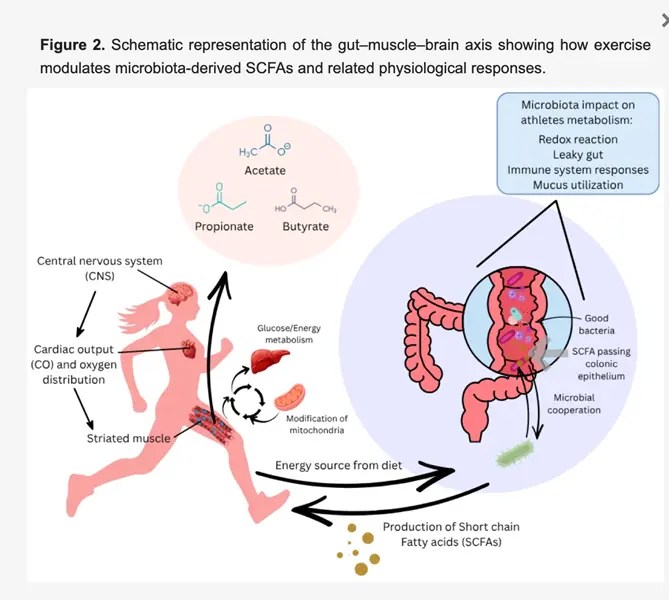
These aren’t trivial differences. A diverse microbiome is generally considered healthier — more resilient to disruption, better at producing short-chain fatty acids (SCFAs) like butyrate, which fuel the cells lining your colon and help regulate immune responses.
↑
Microbial diversity in athletes vs. sedentary controlsSCFA
Higher short-chain fatty acid production in active individuals≈
Diversity difference between endurance vs. strength athletes
What’s actually driving it?
Here’s where it gets interesting — and where a lot of popular science coverage gets it wrong.
When you look at the raw data, athletes eat very differently from sedentary people. They tend to consume more protein, more complex carbohydrates, and more fibre. And fibre, in particular, is one of the most powerful modulators of gut microbiome composition we know of. Fibre feeds bacteria. Different fibres feed different bacteria. So, when a study finds that athletes have more Prevotella (a fibre-fermenting genus) than sedentary controls, is that because of the training or the diet?
This is the central methodological problem in this field. Most studies do not adequately control for dietary intake. They compare athletes and sedentary people without standardising what either group eats, which makes it almost impossible to isolate the effect of exercise itself.
“When a study finds athletes have a richer microbiome than sedentary controls, it’s often unclear whether to credit the training, the diet, or both.”
The few studies that have attempted to separate these variables suggest that diet accounts for a substantial portion of the observed differences. David et al. (2014) showed that short-term dietary shifts, switching to an entirely animal-based or plant-based diet for just five days, produced rapid, dramatic changes in microbiome composition. Exercise operates on a slower timescale, and its direct effect is likely more modest.
Is there a training effect at all?
Yes — but it’s probably indirect. Exercise increases gut motility (how quickly food moves through your digestive system), reduces transit time, and alters intestinal blood flow. These physiological changes create a different environment for microbial communities to inhabit. There is also evidence that exercise lowers systemic inflammation, which in turn may favour anti-inflammatory microbial species.
Animal studies (which allow full dietary control) provide cleaner evidence: rodents given access to running wheels consistently develop more diverse microbiomes than sedentary cage-mates eating the exact same food. This suggests a genuine, diet-independent training effect — but translating that directly to humans is not straightforward.Worth knowing: Most studies in this area are cross-sectional. They take a snapshot of a single point in time and compare two groups. They cannot prove that sport caused the differences in the microbiome. It’s possible that people with certain microbiome profiles are simply more likely to become athletes. Longitudinal studies tracking changes in the microbiome as people start or stop training are rarer but more informative.
So should you exercise for your gut?
Probably yes, but don’t expect miracles, and don’t expect diet to be irrelevant. The evidence suggests that regular physical activity, combined with a high-fibre, varied diet, creates conditions in which a diverse microbial community can thrive. Neither factor alone tells the whole story.
What science has not yet delivered is a definitive, diet-controlled longitudinal study comparing the microbiomes of endurance athletes, strength athletes, and sedentary individuals. Until that exists, we are working with suggestive rather than conclusive evidence.
THE SHORT ANSWER
Athletes do tend to have more diverse, functionally richer gut microbiomes than sedentary people. Exercise likely contributes a real, independent effect — but diet is probably the bigger driver. The two are difficult to separate, and most studies don’t try hard enough to do so.References include: Barton et al. (2018), Clarke et al. (2014), David et al. (2014), Mancin et al. (2024).This article is based on the preliminary background research for my ongoing systematic review, “Gut microbiome signatures of endurance versus strength/power athletes: a systematic review of the evidence and an audit of dietary confounding,” which examines whether differences in gut microbiome composition between athlete types are driven by training modality or dietary intake. Citations available on request.
 Let's BioTech
Leave a comment