
Why the science of ageing went mainstream – and why Singapore is quietly betting its future on it.
A few weeks ago, I started an internship at Chi Longevity, a private longevity clinic in Singapore co-founded by Professor Andrea Maier, who also leads healthy-longevity research at the National University of Singapore (NUS), where her team runs clinical trials on ageing itself. On my first day, one thing surprised me more than anything else: almost nobody talks about “living forever.” They talk about staying healthy for longer. That gap between the headlines and the actual science is exactly what got me curious, and it’s what this article is about.
Why is everyone suddenly obsessed with ageing?
Longevity used to live on the fringe of science. Somewhere between serious research and wishful thinking. In the last few years, it has become a multi-billion-dollar field, with venture capital, celebrity founders, and its own vocabulary. A few things collided at once:
And the demographics demanded it. Populations are getting older almost everywhere, so “healthy ageing” stopped being a vanity project and became an economic necessity.
Scientists organised ageing in a framework. They identified the “hallmarks of ageing”, a list of the main biological processes that drive aging. Suddenly, it became an engineering problem you might actually target rather than a matter of fate.
The money followed. Companies like Altos Labs, Calico, and Retro Biosciences raised enormous sums to study and slow ageing.
Ageing became measurable. “Biological age” tests and epigenetic clocks claim to tell you how old your body really is, and they make ageing feel trackable, like a number you could move.
Culture caught up. Books like Peter Attia’s Outlive, and founders publicly trying to reverse their own age, turned the science into a lifestyle.

So what is longevity actually about?
The single most useful distinction is lifespan versus healthspan. Lifespan is how long you live. Healthspan is how long you live well, without serious chronic disease or frailty. Most longevity researchers care far more about the second one.
Underneath that sits a bigger idea, sometimes called the geroscience hypothesis: that ageing itself is the shared root cause of most chronic diseases: heart disease, many cancers, dementia, type 2 diabetes. If that’s true, then targeting the biology of ageing could delay many of these diseases at once, instead of fighting each one separately after it appears. The goal isn’t immortality; it’s compressing the sick, frail years into the shortest possible window.
The promise
If ageing really is something we can slow, even a little, the payoff is enormous. A single intervention might push back several diseases at once, and this is what researchers call the “longevity dividend.” Add a handful of extra healthy years per person, multiply that across an entire population, and you get a major change in how long people stay independent, working, and well. That’s the dream the field is selling.
A mouse living 20% longer is a real result. It is not the same thing as living 20% longer.
What’s actually viable right now?
Here’s the honest answer that doesn’t make great headlines: the least glamorous things have the strongest evidence. Regular exercise, both cardio and strength, along with decent sleep, real food, not smoking, and staying socially connected, remain the most reliable ways anyone has found to extend healthspan. None of it is new, and all of it works.
Then there’s a tier of promising but unproven interventions, mostly still in animal studies or early human trials: drugs like rapamycin and metformin (the TAME trial is testing the latter), senolytics that try to clear worn-out “senescent” cells, and NAD+ boosters. They’re genuinely interesting, but not yet shown to extend healthy life in ordinary people.
Biological-age clocks sit in a similar place: powerful research tools, but not yet accurate or validated enough that you should run your life by your “epigenetic age” reading.
Where are the hidden risks?
- Hype outruns evidence. A result in mice or in a dish is reported as if it already works in humans.
- Correlation gets sold as causation. “People who do X live longer” rarely proves that X is the reason.
- Supplements and home tests move faster than the science. Plenty are sold long before anyone has shown they help.
- Self-experimentation. People take prescription drugs off-label for ageing, with real side effects and little long-term safety data.
- Access and inequality. If extra healthy years come at a high price, who actually gets them?
- The quieter cost. Changing every meal, workout and night’s sleep into an optimisation problem can make people more anxious rather than healthier.
Singapore’s longevity boom
This is the part I’m now watching up close. Singapore has become one of the places taking healthy longevity most seriously, not just clinics and companies, but the government itself.
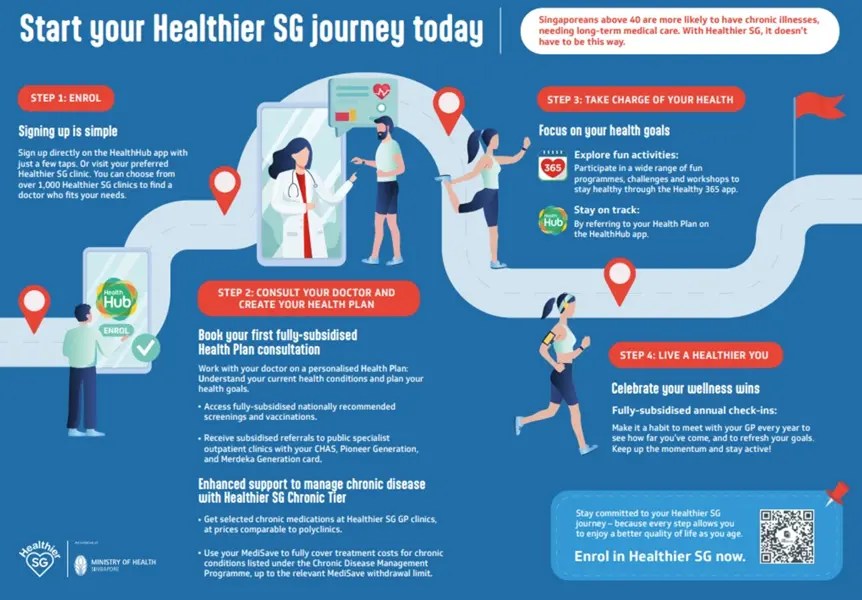
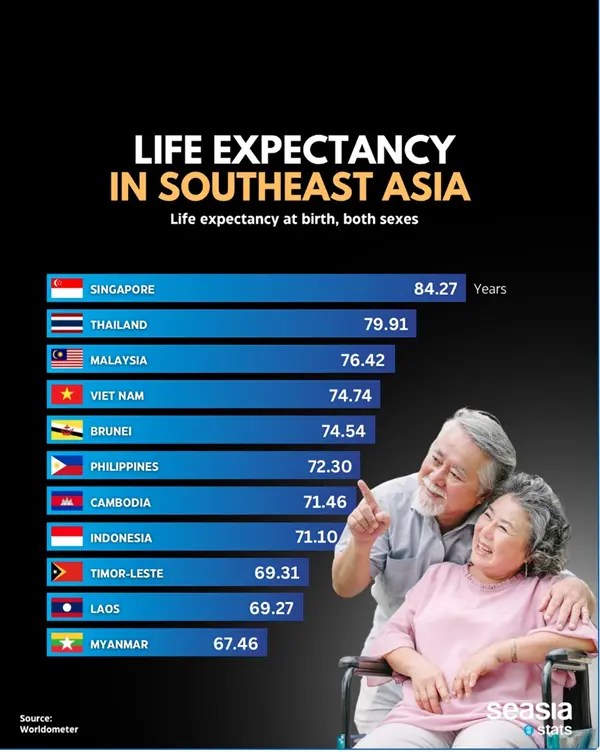
The reason is demographic. Singapore is ageing fast: by 2030, around one in four citizens is projected to be 65 or older. That makes keeping people healthy for longer a matter of national strategy, not just personal wellness. It shows up in preventive-health policy (the Healthier SG programme) and in serious research investment through NUS, whose healthy-longevity programme and academy run real clinical trials, led by researchers including Prof Andrea Maier and Brian Kennedy. Some people have even described Singapore as an “engineered Blue Zone”, an attempt to build the conditions for long, healthy lives by design.
What fascinates me the most is the tension between hype and hard evidence. Here, longevity is at the same time a serious science, a fast-growing industry, and public policy. Navigating the excitement and ambition of this field against the slow pace of scientific progress is the challenge, and it’s exactly what I’m hoping to understand during this internship.
What does a longevity clinic actually do?
Before the internship, I pictured a longevity clinic as a place where people went for one dramatic treatment. It’s almost the opposite. Most of the people who come in aren’t sick at all; they’re well and want to stay well. At Chi Longevity, the whole thing is built around what is called the “Maier Method,” and instead of a quick fix, it’s a structured programme that runs for roughly ten months, aiming not just to slow ageing but to actively lower a person’s biological age.
From what I’ve seen, it moves through a few clear stages:
- Getting started. It begins with a conversation about the person’s health goals and choosing a programme, followed by digital onboarding and a full medical history, all before any testing happens.
- The discovery phase. This is the part that surprised me most. Over the first weeks, patients go through incredibly detailed testing to map their biology: 50+ blood markers, genome sequencing, epigenetic “ageing clocks,” gut microbiome, fitness tests like VO2 max, and even memory and smell tests. They also wear devices such as glucose monitors and sleep trackers so the team can see how their bodies actually respond to food, stress, and exercise.
- Making sense of it all. All that data gets pulled together to estimate a person’s biological age versus their real age, and a team of doctor, dietitian, psychologist, and health coach. This all turns it into one personalised plan.
- The plan itself. Not a simple “eat better, move more.” These are specific targeted treatments or supplements, nutrition matched to how that person’s genes handle certain nutrients, exercise that trains body and brain together, and strategies for sleep, stress, and actually sticking to new habits.
- Following through. The rest of the programme is coaching and check-ins, then re-testing the key markers a few months in to see whether biological age is genuinely dropping and adjusting the plan based on what the numbers show.
The biggest thing I’ve learned is how much of “longevity medicine” is really measurement plus follow-through. The science that gets attention is the futuristic part; the science that helps people right now is mostly patient, unglamorous and personalised figuring out exactly where someone stands, and then helping them stick with it.
What I’m taking away (so far)
I walked in excited, and I’m leaving each day a little more carefully optimistic. There’s genuine promise in the science — and just as much excitement in the hype. Much of what matters in longevity is the ability to separate bold claims from real breakthroughs. That skill, more than any quick fix or miracle cure, may be the most valuable thing longevity research gives us right now.
 Let's BioTech
Leave a comment